In digital marketing, it’s easy to believe that working harder and faster is the only way forward. However, over time, many creators and entrepreneurs discover that consistency beats intensity is what truly leads to real, sustainable results.
Intensity feels productive. Consistency actually works.
This shift in perspective doesn’t just change how you market—it changes how you think about progress, growth, and long-term success online.
This is why a simple digital marketing strategy works better over time.
Consistency Beats Intensity: Build a Sustainable Digital Marketing System (Step by Step)
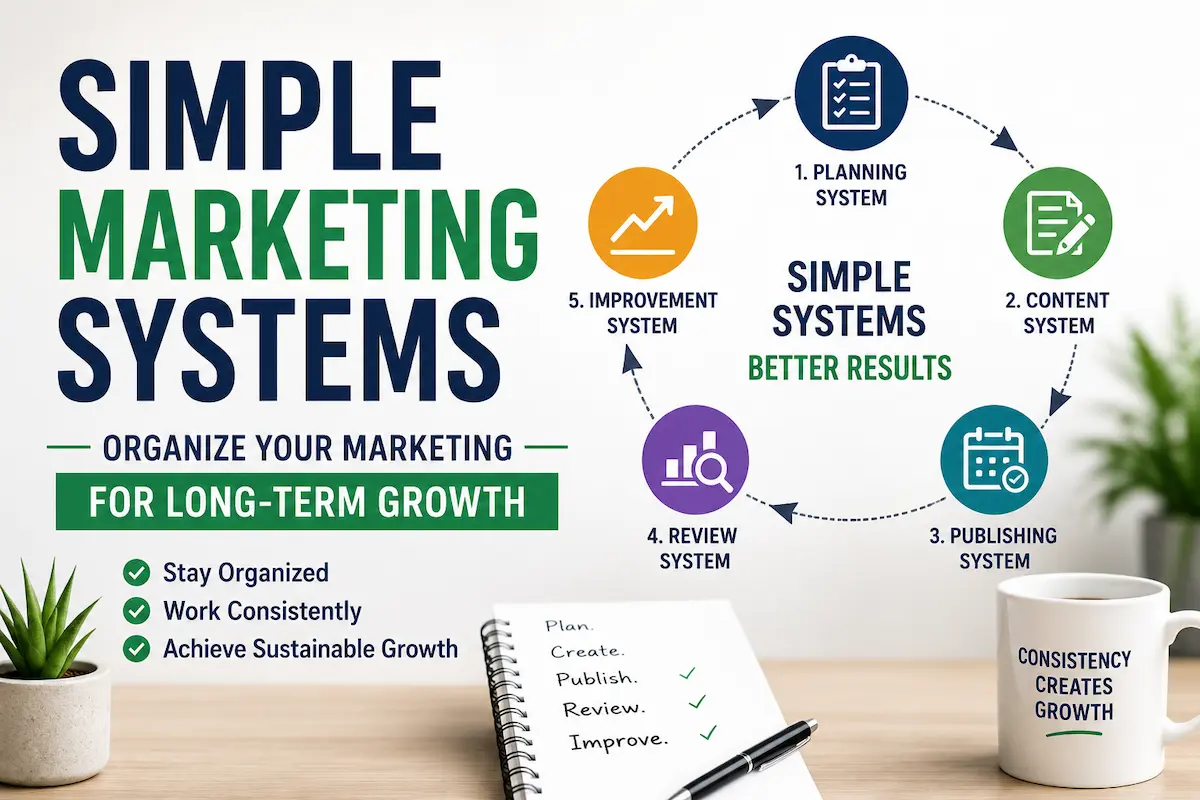
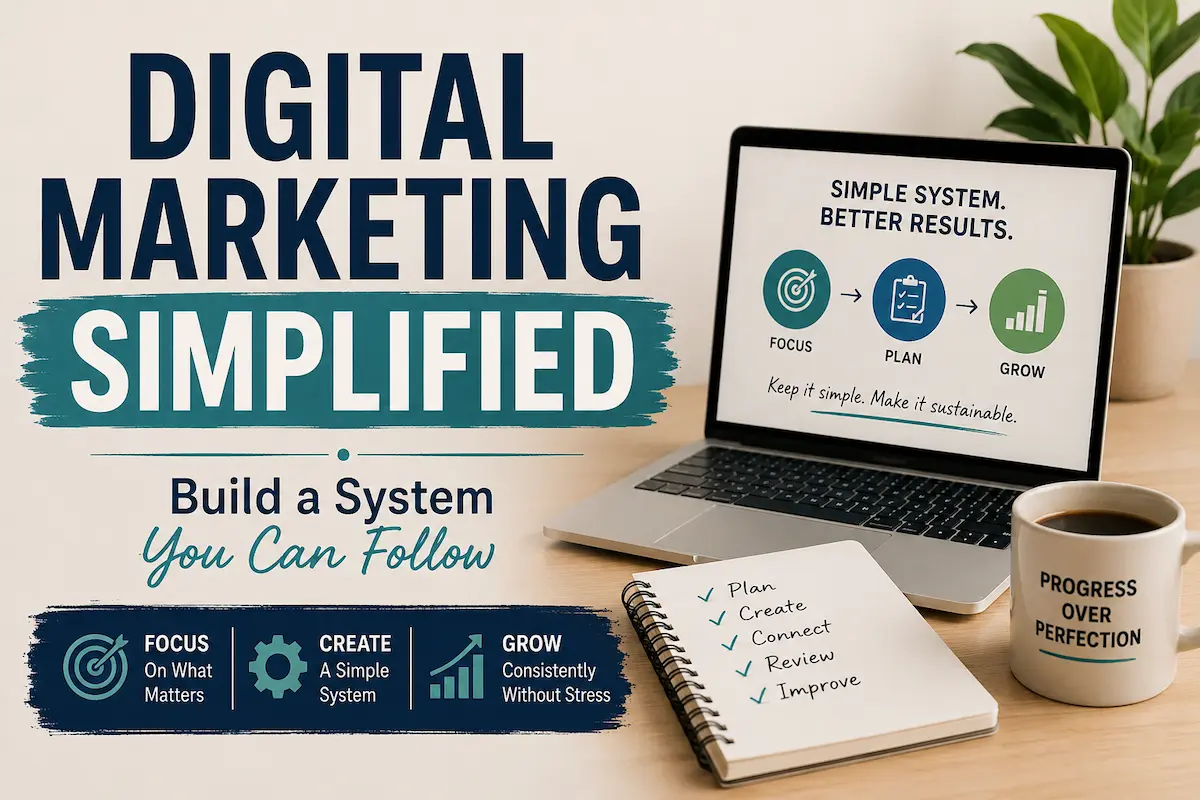
Consistency is not about doing more. It’s about building a simple system you can follow every day without burnout. A slow marketing strategy helps you stay consistent without pressure.
Why Consistency Beats Intensity in Digital Marketing Over Time
At first, intensity is seductive. It shows up as long hours, bursts of motivation, and short periods of extreme focus. You might redesign your website over a single weekend, publish five posts in one week, or dive into a new platform with full energy.
For a moment, it feels like momentum.
The problem is that intensity depends heavily on mood, energy, and external pressure. As a result, when motivation drops—or life happens—the system collapses. Suddenly, the blog goes quiet, the newsletter stops, and social accounts become inactive.
From the outside, it looks like inconsistency.
From the inside, it feels like exhaustion.
In short, digital marketing doesn’t reward short sprints as much as we’d like to believe. It rewards presence, reliability, and signals repeated over time.
Want to build your own simple marketing system?
You can learn how to use ChatGPT to create content, stay consistent, and grow step by step.
Why Consistency Beats Intensity When Building Trust Online
In practice, consistency works on two levels: human and technical.
From a human perspective, people trust what feels stable. When someone sees your content regularly—weekly posts, recurring emails, familiar ideas—they start to recognize your voice. They don’t need you to be everywhere. They just need you to show up.
This idea connects closely with the concept of clarity over hustle in digital marketing, which explains why a more focused approach leads to better long-term results.
From an algorithmic perspective, consistency sends clear signals. Search engines, platforms, and recommendation systems respond better to steady patterns than to unpredictable spikes. Regular publishing, even at a modest pace, creates a footprint that can be measured, understood, and rewarded.
You don’t need to overwhelm the system.
You need to train it.
It also helps build a system of digital marketing without burnout over time.
Small Actions Compound Over Time
Another perspective is to understand why moving slowly in marketing is also a strategy for sustainable growth.
Over time, a single article doesn’t build authority. One email rarely creates an audience, and one campaign alone doesn’t define a business.
Over time, small actions repeated consistently compound in ways that are easy to underestimate.
This approach is simple. It focuses on doing fewer things, but doing them well.
If you want a simple digital marketing system you can actually follow step by step, start here:

Publishing one solid article per week for a year results in over fifty focused pieces of content. Sending one thoughtful email per week builds familiarity and trust. Improving one page at a time slowly strengthens the entire site.
The impact isn’t linear—it’s cumulative.
What feels insignificant today becomes meaningful months later. And what feels slow in the beginning often becomes hard to stop once momentum builds.
Many studies on habit formation and long-term behavior show that small, repeated actions tend to outperform irregular bursts of effort.
This approach is part of a broader view of sustainable digital marketing focused on long-term results.
What Consistency Looks Like in Practice
In reality, consistency isn’t about doing more. It’s about deciding what you can realistically maintain.
In practice, it often looks like:
- A publishing rhythm you can keep even on low-energy weeks
- A simple content structure you don’t need to reinvent every time
- Clear priorities instead of constant experimentation
- Fewer platforms, but used more intentionally
Consistency also means allowing yourself to repeat ideas. You don’t need a brand-new insight every time. Your audience benefits from hearing the same principles expressed in different ways and contexts.
In fact, repetition isn’t laziness. It’s clarity.
You can also read more about how making progress in digital marketing without burning out helps you stay consistent over time.
Intensity Is a Tool, Not a Strategy
That said, this doesn’t mean intensity has no place. At times, short bursts of focused effort can be useful—for launching something new, fixing a problem, or learning a skill.
The mistake is treating intensity as the default mode.
When intensity becomes the strategy, burnout becomes the outcome. When consistency becomes the strategy, intensity becomes optional.
You stop asking, “How much can I do right now?”
And start asking, “What can I keep doing?”
That question alone changes everything.
If you want to explore practical resources and step-by-step training, you can also visit the Internet Marketing Academy.
The Long Game Is Quiet (And That’s a Good Thing)
As a result, consistency becomes easier to maintain over time. In the long run, sustainable digital marketing is rarely loud. It doesn’t rely on constant urgency or dramatic wins. It grows slowly, sometimes invisibly, until one day the system feels lighter instead of heavier.
You trust your process.
Your audience trusts your presence.
Your work fits into your life instead of consuming it.
Consistency is what creates real results over time.
If you want to learn how to stay consistent in digital marketing without burnout, read this:
👉 How to Stay Consistent in Digital Marketing
Over time, this creates better results. It also reduces stress and confusion.
That’s the real advantage.
If you want to apply this approach in practice, you can build a simple digital marketing system step by step.
Consistency beats intensity not because it’s exciting, but because it’s repeatable. And in the long run, repeatable beats impressive every time.
If you’re building something for the long term, consistency is your real advantage.
But over time, most creators realize that consistency beats intensity not because it feels impressive, but because it’s repeatable. And in digital marketing, what you can repeat calmly will always outperform what you can only do occasionally.
In the end, clarity matters more than speed.
Consistency is the foundation of a sustainable digital marketing strategy.